Gifford Pinchot National Forest campsites range in elevation from 1,800 to 4,500 feet, creating diverse camping experiences with significant temperature variations. Summer nights often drop below 45°F even when daytime temperatures reach the 80s. Vault toilets are the standard amenity at most forest campgrounds, with drinking water available only at larger established sites.
What to do
Fishing at Council Lake: Council Lake offers excellent trout fishing opportunities throughout summer months. Electric motors and hand-operated boats are permitted. "The trout fishing is great here, but bring some mosquito repellent or you'll be sorry," notes a visitor to Council Lake.
Waterfall hiking: Multiple waterfalls are accessible throughout the forest, with some directly from campgrounds. "There is a trail that runs along the river. There are three sets of falls all of which are beautiful, however the best is the lower one located next to the campground," reports a camper at Lower Falls Campground.
Stargazing: Clear nights offer exceptional stargazing at higher elevation campgrounds away from light pollution. "Saw elk splashing through the meadow at night while we watched stars and satellites," shares a visitor at Elk Meadows RV Park.
What campers like
Sound of waterfalls: Many campers appreciate the natural white noise provided by nearby waterfalls. "Sleeping near the falls was amazing, as it drowns out so much, especially at night," notes a camper about Twin Falls.
Wildlife viewing opportunities: The forest hosts diverse wildlife including deer, elk, river otters, and various bird species. "I saw a river otter basking in the shallows, and several eagles diving for fish while I was here," reports a visitor to Council Lake.
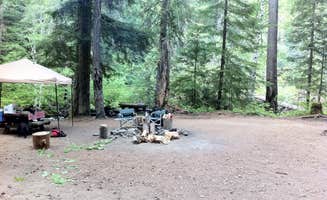
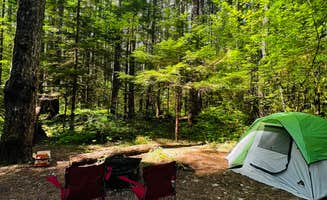
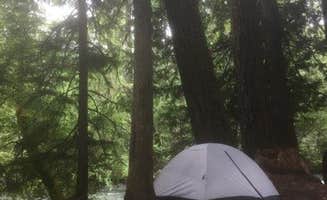
Old growth forests: Several campgrounds feature ancient trees creating distinctive camping environments. "The forest is so thick couldn't hear other campers. Trees here are 600 years old. Huge," describes a camper at Iron Creek Campground.
What you should know
Seasonal mosquito conditions: Insects can be problematic at certain campgrounds, particularly in early summer. "We had a bug canopy so got away from most of them, but I stopped counting my bites after 40. If you come, remember to bring ALOT of bug spray," warns a visitor to Takhlakh Lake Campground.
Access roads: Forest road conditions range from paved to extremely rough depending on location and recent maintenance. "The road (FS120) was not well-maintained at all. I would recommend a higher clearance vehicles or skill in maneuvering deeply rutted and uneven dirt roads with significant potholes," advises a camper at Horseshoe Lake.
Water availability: Many smaller campgrounds lack potable water. "No water other than what's at the lake. The water onsite was not working but we were prepared with our own," reports a visitor about Lower Falls.
Tips for camping with families
Swimming areas: Several campgrounds offer access to lakes and rivers with swimming opportunities. "We spent days on the river in the sun. It was truly amazing. The water is cold, clear, and so refreshing," shares a family visiting Lower Falls Campground.
Huckleberry picking: Seasonal huckleberries grow throughout the forest, particularly in late July and August. "Also it was the start of a very good huckleberry season and the entire campground was full of huckleberry bushes. I was able to gather several cups just from my camp spot alone," notes a camper at Peterson Prairie Campground.
Creek exploration: Even seasonally dry creek beds can provide entertainment for children. "We visited in August and there was zero water flowing, but the kids enjoyed exploring the creek bed," mentions a family at Peterson Prairie.
Tips from RVers
Site leveling: Many campgrounds have uneven or sloped sites requiring preparation. "Our campsite (#6) was right next to the trailhead down to lower falls and the bathrooms so it was not the most private but we never thought it was an issue. Some sites are definitely more private than others," reports an RVer visiting Lower Falls.
Length limitations: Forest roads and campsite designs often restrict larger RVs and trailers. "It's a bumpy windy road down to the campground. I wouldn't take a car down without high clearance. Didn't need 4WD to get around but the ruts are deep in certain spots," cautions a visitor to Twin Falls.
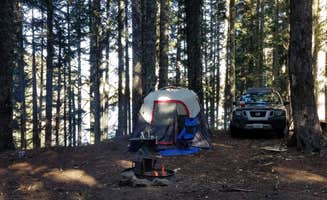
Power considerations: Dense forest canopy affects solar panel effectiveness at many campgrounds. "We use a solar panel to run out refrigerator. The trees were so thick we were on battery the whole time," notes a camper at Iron Creek Campground.





 Scout
Scout


